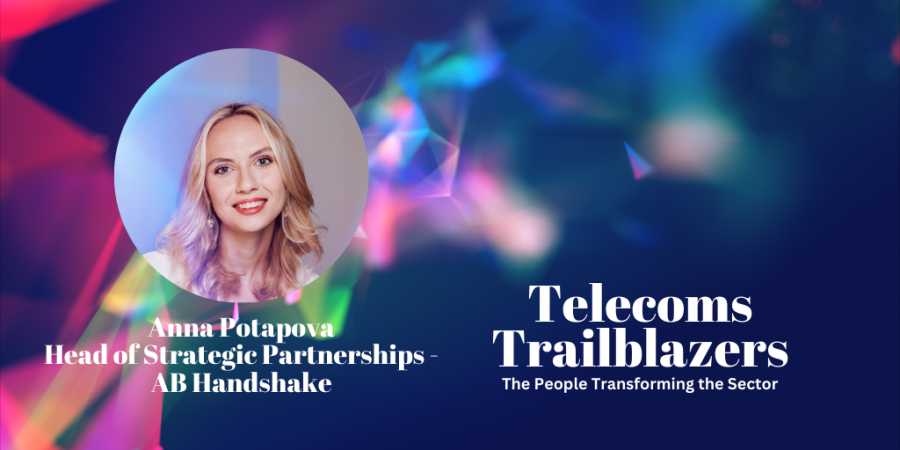
Hello, my name is Anna Potapova, the Head of Strategic Partnerships at AB Handshake, which is a provider of real-time AI fraud prevention. The company’s headquarters are based in Miami, but we have a global outreach, and I’m based in our European office in Valencia, Spain.
AB Handshake helps operators and telecoms service providers protect their subscribers and businesses from scams, ensuring communication channels are safe and secure. To restore the integrity of voice and SMS, we are working with mobile operators, international wholesale carriers, enterprises, and governments — we want people to answer their phones without fear!
My role is primarily focused on business development, which involves collaborating with major operators and technology partners to scale our solution globally across different verticals. I also combine my technical and commercial knowledge to support customers in switching to AI-enabled fraud detection methods, which I really enjoy.
Fraud poses significant economic, psychological, and reputational dangers to both individuals and businesses. Many associate the crime with scam calls, but it is much broader and deeper than most realise; in addition to financial issues, fraud can damage brand reputation and even threaten national security. As a result, a multi-layered approach is required — I follow market trends, stay ahead of new ones, and work closely with regulators to adopt new methodologies.
What do you enjoy most about working in this space?
Telecoms is where innovation is born! I am constantly learning and forming new relationships and collaboration partners.
What’s the most ridiculous thing you’ve done in the name of work?
I once went to Nairobi, Kenya, for meetings with some of our customers and with the government. While I was there, my colleagues and I also took a day to spend time with a local NGO working in Kibera, one of Africa’s largest slums, located in the Kenyan capital, to better understand the broader local context and the role telecoms play in people’s everyday lives.
Spending time there and connecting with local residents reminded me that working in global telecoms gives you a front-row seat not only to innovation, but also to the world’s diversity and very different lived realities. It shapes how I think about meaningful work and the responsibility we have when building technologies that ultimately impact many lives.
Where do you see telecoms heading?
Over the past decade, people have lost confidence in traditional telecom channels due to fraud, but my field is now taking a more conscious approach to technology. We must rebuild trust and preserve the businesses of communication channels. However, this confidence can be restored through advanced technologies such as AI, combined with more collaborative, community-oriented approaches that the industry is actively developing.
What would you like people to know about your work?
Fraud is rapidly increasing, particularly in the B2C sector. I see new scam techniques almost every day, and traditional security protocols are incapable of preventing sophisticated attacks. Because fraudsters are always innovating, we need systems that evolve even faster - which is why real-time, AI-driven fraud detection has become essential in our industry.
Why is a vibrant, flourishing telecoms ecosystem important for the UK?
The UK is a global hub for business; however, despite the widespread use of OTTs, many companies rely on text messages to authenticate transactions. Improved security will increase businesses’ trust in the UK, and an ecosystem is the best way to facilitate that.